Songdo Doesn't Care About Seoul — And That's Exactly the Point
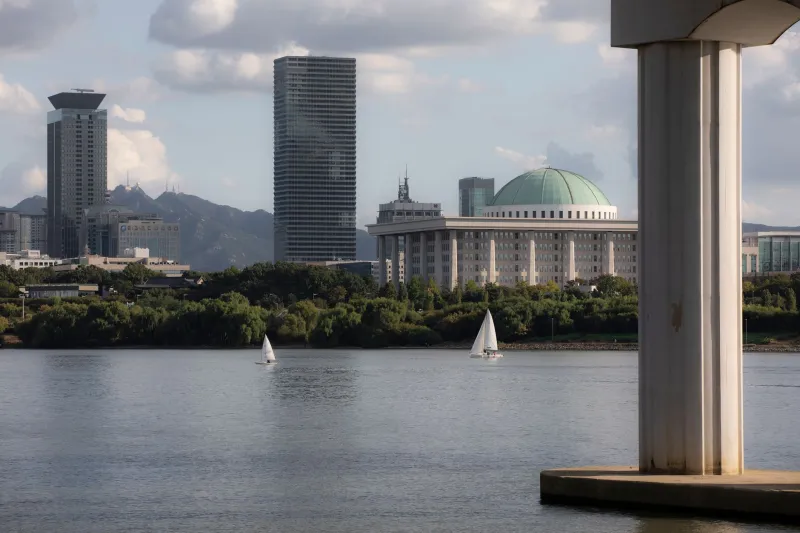
There's a moment that happens to almost every American who visits Songdo for the first time. You step out of the subway — clean, quiet, on time — and you look around at the wide bike lanes, the LEED-certified towers, the Central Park that was literally designed by the same firm that did the one in Manhattan, and you think: Wait. This is a city?
Yes. It is. And it's been one since 2003, when South Korea started filling in the Yellow Sea to build it.
Songdo International Business District, tucked into the western edge of Incheon, was always an ambitious project. Critics called it a ghost town. Boosters called it the future. The truth, as usual, is somewhere messier and more compelling than either camp wanted to admit.
What Songdo Actually Is (And Isn't)
Let's get the origin story out of the way. South Korea spent roughly $40 billion building Songdo on 1,500 acres of reclaimed tidal flat. The pitch was simple: create a fully wired, internationally connected smart city near Incheon International Airport that could attract global corporations and become Northeast Asia's business hub.
Some of that worked. Some of it didn't. A lot of the early corporate tenants never showed up the way planners hoped. But what grew instead was arguably more interesting — a dense, livable, genuinely functional neighborhood that has become a magnet for Korean families, international expats, university students, and, increasingly, American visitors who weren't expecting to be impressed.
The infrastructure here is legitimately different from anything most Americans have seen outside of a TED Talk. Pneumatic waste disposal tubes run beneath the streets, meaning garbage trucks are largely unnecessary. A citywide sensor network monitors everything from traffic flow to air quality. Buildings communicate with each other. The canal system — yes, there are canals — is designed to regulate temperature and reduce urban heat.
None of this is hypothetical. It's just Tuesday in Songdo.
The Americans Who Keep Coming Back
Ask around the expat community in Songdo and you'll find a surprisingly large contingent of Americans — not just corporate transplants, but people who came for a semester teaching English and quietly decided to stay. The reasons they give tend to cluster around the same themes: walkability, safety, green space, and a sense that the city was designed for humans rather than cars.
"I grew up in suburban Atlanta," says one English teacher who asked to be identified only by her first name, Meredith. "The idea that I could walk to a grocery store, take a bike to the park, and get on a train to the airport in 40 minutes — I genuinely did not know cities could work like this."
That sentiment is echoing louder in American urban planning circles, too. Delegations from cities including Cincinnati, Phoenix, and several mid-sized Texas metros have visited Songdo in recent years to study its infrastructure model. The appeal isn't just the technology — it's the underlying philosophy that density and livability aren't opposites.
Central Park, But Make It Korean
The centerpiece of Songdo's residential identity is its Central Park — 100 acres of green space running through the middle of the district, complete with kayaking canals, outdoor performance spaces, and a boardwalk that fills up with families on weekend evenings. It's designed to be used, and it is.
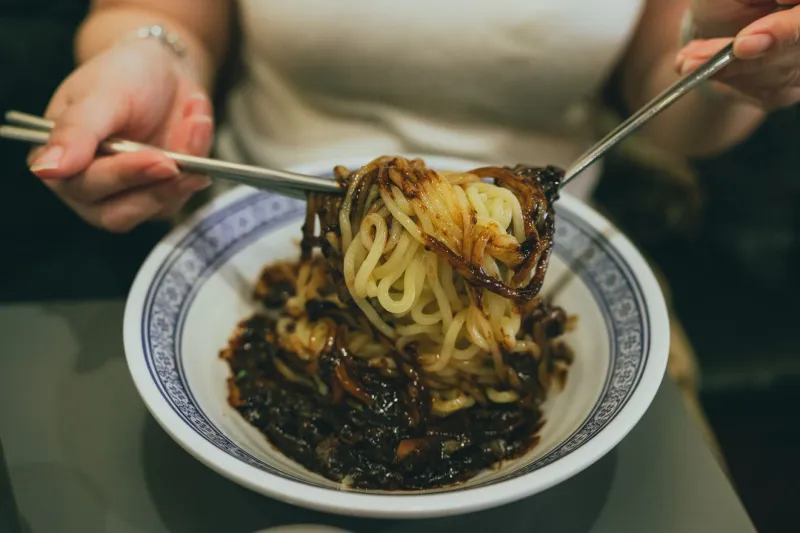
What makes it distinctly Songdo is the way it exists alongside the city's international character. On any given Saturday you'll hear Korean, English, Mandarin, and half a dozen other languages on those paths. The international schools nearby draw families from across Asia and beyond. The food scene in the surrounding blocks reflects that mix — there are Korean BBQ spots and pojangmacha-style street stalls, but also Thai restaurants, American brunch places, and a growing number of international bakeries that have figured out Songdo's residents will pay for good croissants.
For American visitors, it can feel like a weird, wonderful parallel universe — familiar enough to navigate comfortably, foreign enough to feel genuinely new.
The Smart City That Got Real
Here's the thing that urban planners often miss when they study Songdo from a distance: the most interesting parts aren't the pneumatic tubes or the sensor networks. They're the ways ordinary life has colonized a planned city and made it feel unplanned.
The pojangmacha carts that appear near the canal at night. The older Korean couples who do their morning stretches in the park regardless of what the smart city app says the weather will be. The teenagers who have figured out exactly which corners of the waterfront are the best for hanging out after school.
Songdo was designed with extraordinary precision. But it became a real city the old-fashioned way — through the slow accumulation of people doing ordinary things in it.
For American visitors, especially those who've spent time fantasizing about what urban life could look like back home, Songdo offers something rare: proof of concept. It's not perfect. Parts of it still feel underbuilt, and the corporate district remains quieter than planners once hoped. But as a vision of what a city can do when it takes infrastructure seriously, it's hard to argue with.
You don't have to catch a flight to see the future of urban living. Sometimes you just have to take the subway to Songdo and look around.