Seoul Who? Incheon's Scrappy Tech Scene Is Building Korea's Next Big Thing
There's a version of the Korean startup dream that looks like this: a glass-walled office in Gangnam, a pitch deck with the word "disruption" in it somewhere, and a VC partner who takes your call because someone important vouched for you. It's a familiar script — and a growing number of Korean founders are completely over it.
Incheon, the port city that most Americans only know as the place their flight lands before they take the KTX to Seoul, has been quietly collecting these refugees. Entrepreneurs. Engineers. AI researchers. Hardware tinkerers. People who got tired of paying Seoul prices for Seoul problems and decided to build something real instead.
The result? A scrappy, genuinely exciting tech underground that most of the Korean media hasn't fully caught up to yet.
Why Incheon, and Why Now
Let's talk numbers for a second, because they matter here. Office space in Seoul's prime startup districts — think Mapo, Seongsu, or anywhere near Gangnam — can run three to five times what you'd pay for comparable square footage in Incheon. For an early-stage team burning through a seed round, that gap is existential.
But it's not just about cost. Incheon has been quietly building infrastructure to support exactly this kind of talent migration. The Incheon Free Economic Zone, often called IFEZ, has been around since 2003, but it's taken on new energy in the past few years as the city has doubled down on attracting tech-adjacent businesses. Songdo — that planned smart city district that always sounds slightly futuristic when you describe it — has become a legitimate hub for biotech and logistics-tech companies that need room to breathe and test things at scale.
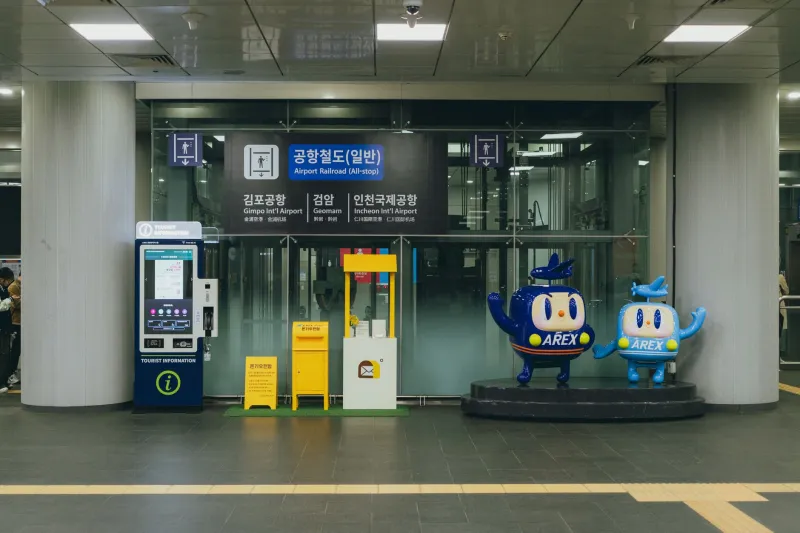
And then there's the airport factor. Incheon International sits right there, which sounds obvious, but for founders who are constantly flying to meet investors in Singapore, Tokyo, or San Francisco, being 30 minutes from one of the world's best-connected airports is genuinely strategic. Seoul founders deal with that commute too — but Incheon founders live it differently.
The Founders Who Chose This
Jiyeon Park spent two years grinding through Seoul's startup scene before she moved her AI-driven logistics platform to Incheon's Namdong Industrial Complex. "In Seoul, every conversation eventually becomes about your funding round," she says. "Here, people ask what you're actually building."
Her company — which uses machine learning to optimize last-mile delivery routing for small and mid-size e-commerce brands — now has a team of eleven and recently closed a Series A with a Singapore-based fund. She didn't need a Seoul address to do it.
Down near the Incheon port area, a hardware startup called Wavcore is doing something that would have seemed almost impossible to pull off outside of a major metropolitan center five years ago: building custom sensor arrays for industrial maritime applications. Co-founder Dohyun Lim, who spent time at a semiconductor firm in Suwon before going independent, says Incheon's proximity to actual shipping infrastructure makes it the only place his work makes sense. "We test on real vessels. You can't do that in Teheran-ro," he says, referencing Seoul's famous startup corridor with a laugh.
There's also a younger cohort — developers and designers in their mid-twenties who moved to Incheon not because they had a company yet, but because they wanted to start one without the social overhead of Seoul's hyper-competitive tech culture. Several of them have clustered around a co-working collective near Bupyeong that operates on a sliding-scale membership model and hosts weekly demo nights that have developed a cult following.
The VC Bubble Problem Is Real
Here's the thing that Seoul insiders don't love to talk about: the Korean venture capital ecosystem, for all its growth over the past decade, has developed some pretty significant blind spots. Funding has concentrated heavily around consumer apps, fintech, and anything that can be pitched with a K-pop adjacency angle. Hardware is underfunded. Deep tech is underfunded. Anything that requires a longer development runway than a Series A investor wants to sit with tends to get squeezed out.
Incheon's founders, perhaps because they're already operating outside the main circuit, seem to be building in exactly those neglected categories. It's not a coincidence. When you're not surrounded by the noise of what's currently hot in Seoul's VC community, you end up solving problems that actually need solving.
That said, the city isn't operating in total isolation. Incheon Technopark runs accelerator programs that have gotten more competitive each year, and there are genuine connections forming between Incheon-based founders and international investors who specifically seek out overlooked markets. A handful of US-based Korean diaspora investors have reportedly been sniffing around the scene, curious about what's being built outside the capital's spotlight.
What This Means for Korea's Bigger Tech Picture
Korea's tech narrative has long been written from Seoul, by Seoul, for Seoul. The dominant story is about the big chaebols — Samsung, LG, Kakao, Naver — and the startups that orbit them hoping for an acquisition or a partnership deal. Incheon's emerging scene doesn't fit neatly into that story, which is partly what makes it interesting.
If the city can keep building the right support structures — better connectivity between its scattered innovation zones, more programming that bridges the gap between the port economy and the digital economy, and continued investment in housing and quality of life for young tech workers — it has a real shot at becoming something genuinely distinct from Seoul's ecosystem rather than just a cheaper version of it.
That distinction matters. Korea doesn't need another Seoul. It needs an Incheon that's fully itself: messy, port-city practical, internationally connected by geography, and increasingly home to people who are more interested in building things than performing the act of building things.
The Vibe Is Different Here
Spend a few evenings in Bupyeong or out near Songdo and you'll notice something. The tech people here talk about their work differently. Less jargon. More specificity. More willingness to say "we don't know yet" without it sounding like a red flag.
Maybe that's what happens when you remove the pressure of being seen by the right people at the right rooftop networking event. Or maybe Incheon just selects for a certain kind of founder — one who's comfortable enough with uncertainty to choose a city that the hype machine hasn't fully discovered yet.
Either way, something real is being built here. And if history is any guide, by the time Seoul's startup media catches up to it, the people who got here first will already be three steps ahead.