Scroll, Snap, Repeat: How TikTok Turned Incheon's Old Hanok Lanes Into a Gen-Z Pilgrimage
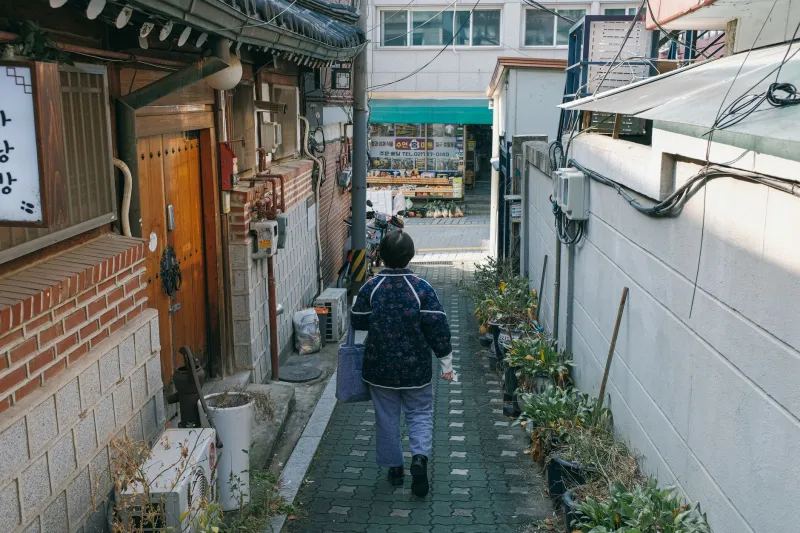
The alley is narrow enough that two people passing each other have to turn sideways. The curved clay-tile rooftops catch the late afternoon light in a way that feels almost designed for a camera — low golden tones, layered shadows, the kind of visual texture that algorithms reward. A young woman in a rented hanbok pauses mid-step, adjusts her sleeve, and her friend lifts a phone.
This scene repeats roughly every four minutes in Incheon's Sinpo-dong hanok district on a weekend afternoon.
What was once a neighborhood that locals described as "forgotten" has become, in the span of about two years, one of the most-tagged locations in the city. The driver? A cascade of short-form videos that started small, went regional, then global — and fundamentally changed what this place is and what it's for.
How a Forgotten Lane Goes Viral
The mechanics of hanok-district virality follow a familiar pattern to anyone who's watched social media transform a neighborhood. A few creators post aesthetically striking content. The algorithm surfaces it to users interested in Korean culture, travel, or fashion. Those users share it, remix it, stitch it. A location tag accumulates. Then the visitors come — first dozens, then hundreds, then the kind of weekend crowds that require temporary crowd-management barriers.
In Incheon's case, the content that kicked things off wasn't even primarily about the architecture. It was a fashion video — a Korean creator styling a modern outfit against the hanok backdrop, playing with the contrast between contemporary streetwear and centuries-old design. The visual tension was striking, the engagement was massive, and suddenly the alley was a set.
"I've watched this happen in real time," says Jiyeon Kwak, a heritage conservationist who has worked with Incheon's municipal preservation office for over a decade. "The neighborhood didn't change. The context around it changed completely."
The Creators Who Come and the Residents Who Stay
For US audiences, the dynamic here might call to mind what happened to places like Wicker Park in Chicago, the French Quarter in New Orleans, or Brooklyn's DUMBO neighborhood — locations where authentic character attracted creative attention, which attracted tourism, which gradually priced out the very people who made the character worth documenting.
Incheon's hanok districts are at an earlier, more uncertain point in that arc. The gentrification pressure is real but not yet catastrophic. Small businesses have opened to serve the new foot traffic — hanbok rental shops, photogenic dessert cafés, artisan goods stalls. Some longtime residents have welcomed the economic activity. Others are less enthusiastic.
"My grandmother has lived in this neighborhood for forty years," says one resident who asked not to be named. "She doesn't mind the tourists. She minds that her landlord suddenly wants to triple the rent because he saw the neighborhood on TikTok."
It's a tension that plays out globally wherever social media accelerates the discovery-to-commodity pipeline. The content is free. The consequences aren't.
What the Creators Actually Think
Not all the creators flooding these lanes are indifferent to the complexity. Several who spoke with Incheon MSG described a genuine tension between wanting to share something beautiful and worrying about what that sharing does.
"I think about it every time I post a location tag," says Marcus Yoon, a Korean-American creator based in Los Angeles who visited Incheon's hanok district while traveling to see family. "You want to say 'this place is incredible, come see it.' But you've also seen what happened to places that got loved to death."
His compromise: he posts the content but deliberately vague-tags the location, directing interested followers to a blog post that includes context about the neighborhood's history and asks them to be respectful visitors. It's a small intervention, but he says the comment section response has been positive.
"People actually appreciate being given that context. It makes the place feel more real than just a backdrop."
The Preservation Question
For Jiyeon and her colleagues, the viral moment presents a genuine double-edged opportunity. On one hand, increased public interest in hanok architecture creates political will for preservation funding — it's easier to argue for protecting something when the public visibly values it.
On the other hand, preservation that's optimized for photogenic tourism tends to produce a sanitized version of history. The messy, inhabited, sometimes deteriorating reality of a living neighborhood gets smoothed out in favor of the aesthetic that performed well on the algorithm.
"We have to be careful that we're preserving places, not just backdrops," Jiyeon says. "A hanok neighborhood that's been renovated purely to be pretty for cameras has lost something essential, even if it looks more 'authentic' than before."
The Incheon municipal government has been navigating this carefully, implementing visitor guidelines in the most trafficked lanes and working with local business associations to distribute foot traffic more evenly across the district rather than concentrating it on the most-filmed spots.
Why Gen-Z Keeps Coming Back
Here's the thing that's easy to miss in the hand-wringing about social media tourism: a lot of the young people showing up in Incheon's hanok districts are genuinely curious. They're not just there for the photo. Many of them, particularly second-generation Korean-Americans and international visitors who discovered Korean culture through music and drama, are using these spaces to connect with something they feel is part of their identity but have never physically encountered.
"My parents are from Korea but we grew up in California," says Diana Cho, 23, who was visiting Incheon for the first time. "I've seen hanok in dramas my whole life. Being here and walking through one in person felt like — I don't know, like something clicked."
That kind of connection is real. It's also complicated. And the neighborhood that's hosting it is doing its best to figure out what it owes to the past, the present, and the algorithm — in that order.