Rust, Grit, and Runway: The Rogue Designers Putting Incheon on the Fashion Map
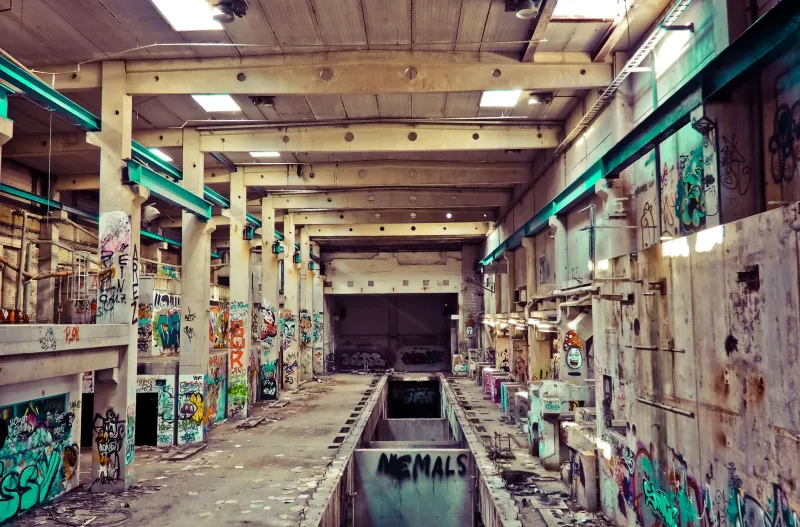
There's a particular kind of energy you feel when you walk into an Incheon warehouse at 10 PM on a Saturday and realize you've stumbled into something that wasn't supposed to exist yet. The lighting is half-intentional, half-broken fluorescent. The music is too loud. Someone in a deconstructed coat made from repurposed fishing net is handing out flyers for next month's show. And every single person in the room looks like they're building something Seoul hasn't figured out how to name yet.
Incheon's underground fashion scene isn't a trend. It's a reaction.
The Seoul Problem Nobody Wants to Say Out Loud
For decades, Korea's fashion conversation has been almost entirely Seoul-centric — and specifically, concentrated in neighborhoods like Apgujeong and Hannam-dong, where the aesthetic tends toward high-gloss, brand-conscious, and expensive. That's not a criticism so much as a description. Seoul's fashion industry is genuinely impressive, and its influence on global streetwear is undeniable.
But influence and innovation aren't always the same thing. A growing number of Korean designers — particularly younger ones — have started to feel like Seoul's fashion ecosystem rewards polish over risk. The runway shows are beautiful. The price points are aspirational. And the space to experiment, to fail loudly, to make something genuinely weird? It's narrow.
That's where Incheon comes in.
"Seoul has the money and the infrastructure," says Yoon Jisoo, a 27-year-old womenswear designer who relocated from Hongdae to Incheon's Jung-gu district two years ago. "But Incheon has the freedom. Nobody's watching you fail here. And that means nobody's stopping you from trying something that looks completely insane."
Jisoo's most recent collection — a series of structured silhouettes built around reclaimed industrial canvas and oxidized metal hardware — debuted not at a gallery or a boutique hotel, but in a repurposed cold storage facility near the waterfront. Attendance was invite-only, capacity was maybe 80 people, and the whole thing cost less to produce than a single ad placement in a Seoul fashion magazine. It sold out.
The Spaces That Make It Possible
Part of what distinguishes Incheon's fashion underground from a simple geographic alternative to Seoul is the physical infrastructure — or rather, the beautiful lack of it. The city's industrial history has left behind a patchwork of underused warehouses, decommissioned port facilities, and old manufacturing spaces that are cheap to rent and impossible to replicate aesthetically.
The corrugated metal walls. The concrete floors with decades of scuff marks. The loading dock that doubles as a stage. These aren't limitations — they're the whole point.
Collective spaces like the ones clustered near Incheon's Art Platform district have become informal hubs for designers who want a place to work, show, and connect without the overhead of a Seoul studio. Some of these spaces operate on sliding-scale rent agreements. Others are essentially glorified squats with the building owner's tacit approval. A few have formalized into genuine creative residencies.
"The aesthetic of this city is already doing half the work for you," says designer Park Seunghyun, who creates gender-fluid tailoring under the label Cold Port. "When you shoot a lookbook in front of a rusted shipping container with the Yellow Sea behind it, you don't need a stylist to make it feel like something. The environment is the statement."
Cold Port's pieces — asymmetrical blazers, wide-leg trousers in muted industrial palettes, outerwear with exposed structural seaming — have developed a cult following among Korean fashion insiders who found the brand through Instagram and word of mouth, never through a traditional retail channel.
What "Underground" Actually Means Here
It's worth being specific about what the Incheon fashion underground is and isn't. It's not a unified movement with a manifesto. There's no central organizing body, no official fashion week calendar, no shared aesthetic beyond a general rejection of the overtly commercial.
What it is, more precisely, is a loose ecosystem of designers, stylists, photographers, and event organizers who share a preference for doing things outside the established infrastructure. Pop-up shows announced 48 hours in advance. Collaborative collections between designers who met at a night market. Zines distributed at record shops. Lookbooks shot on film cameras by friends who happen to be good photographers.
The vibe, for American readers, sits somewhere between the early days of New York's Lower East Side fashion scene in the late '90s and the DIY streetwear culture that incubated brands like Supreme before they became institutions. It has that particular pre-commercial electricity — the feeling that you're watching something that will eventually be recognized as important, but isn't being treated as important yet.
The Designers Worth Knowing
Beyond Jisoo and Park Seunghyun, a handful of other names keep surfacing in conversations about Incheon's fashion moment.
Choi Mirae works almost exclusively in upcycled materials sourced from Incheon's wholesale fabric markets and secondhand industrial suppliers. Her pieces are technically menswear but wear more like wearable sculpture — the kind of thing that makes you stop and ask questions. She sells primarily through DMs.
Lee Dohwan, a knitwear specialist who trained in London before returning to Korea, has been developing a practice around traditional Korean textile techniques combined with industrial dye processes. His work has been picked up by a small but influential set of buyers in Japan and Germany, almost entirely without press coverage.
And then there's the collective known simply as Port Noise — a rotating group of designers and artists who organize Incheon's most talked-about underground fashion events, including a biannual show that takes place in a different undisclosed location each time. Last year's edition was held in the lower level of a parking structure in Bupyeong. The one before that was on a decommissioned ferry.
Why This Matters Beyond Korea
For American audiences who follow fashion, the Incheon scene is worth paying attention to for a few reasons that go beyond novelty.
First, the economic model. In an era when fashion's traditional infrastructure — the department store, the glossy magazine, the trade show — is visibly struggling, watching a community build a viable creative economy entirely outside that infrastructure is genuinely instructive. These designers are finding audiences, generating revenue, and sustaining practices without most of the things the industry has historically treated as prerequisites.
Second, the aesthetic itself. The industrial-coastal visual language that Incheon's designers are developing has a specificity and a coherence that feels genuinely new — not derivative of Seoul, not chasing Western trends, not trying to be anything other than exactly where it comes from.
And third — maybe most importantly — it's just exciting. Fashion gets dull when it gets safe. Incheon's scene is anything but safe.
The next time you're passing through Incheon International Airport and thinking about whether to venture into the city, consider this: somewhere in Jung-gu or Bupyeong or down near the waterfront, someone is probably setting up folding chairs in a warehouse and getting ready to show you something you've never seen before. You just have to know to look for the flyer.