Walls With Something to Say: How Incheon Became Korea's Unlikely Street Art Capital
There's a wall in Incheon's Jung-gu district that stops people mid-stride. It stretches nearly forty feet across the side of a former cold storage facility, and on it, a giant octopus wraps its arms around a container ship while two haenyeo — traditional women divers — float in the space between. It's vivid, it's strange, and it absolutely should not work. But it does. Completely.
This is Incheon's street art scene in a single image: unexpected, rooted in local identity, and way more sophisticated than anyone outside the city gives it credit for.
The Port City Canvas
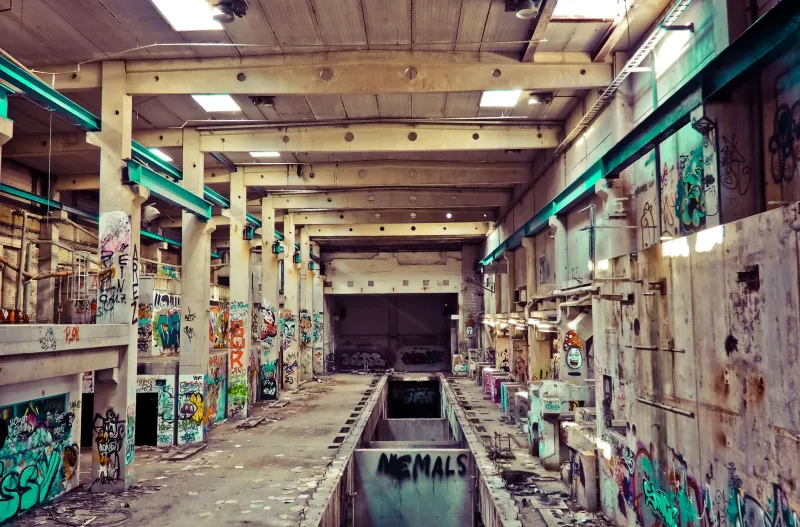
Incheon has always had a certain roughness to it. That's not a knock — it's actually the whole point. While Seoul spent decades polishing itself into a global metropolis of glass towers and curated aesthetics, Incheon held onto its industrial bones. The old port warehouses, the colonial-era architecture in the Chinatown corridor, the peeling facades of mid-century apartment blocks — all of it created exactly the kind of gritty, textured environment that street artists dream about.
"Seoul is too clean," says Jeon Mirae, a muralist who relocated from Hongdae to Incheon's Bupyeong neighborhood five years ago. "When everything looks designed already, you're just adding decoration. Here, the walls actually need something. The art has a reason to exist."
That sentiment has become something of a rallying cry among the loose community of artists who've made Incheon their base. The city's older neighborhoods — particularly around the Incheon Open Port area and parts of Namdong — offer a visual rawness that Seoul simply can't replicate. Rust, weathering, the layered history of a place that's been a gateway to the world since the 1880s. For artists, that's not a problem to fix. It's a starting point.
How the Districts Developed
The transformation didn't happen overnight, and it wasn't the result of any single city initiative. It grew organically — which, if you know anything about street art culture, is exactly how the best scenes always develop.
The earliest concentrated murals appeared around Songwol-dong and the old Chinatown border, where artists began responding to the neighborhood's layered cultural history. Korean, Chinese, and Japanese influences collide architecturally in that area, and the early murals reflected that collision — abstract works that played with calligraphic forms, imagery pulled from the port's trading history, portraits of the community's elders.
From there, the energy spread. The area around Bupyeong Underground Shopping Center became a hotspot for younger, more experimental artists. The coastal neighborhoods near Wolmido Island attracted muralists drawn to the interplay between industrial infrastructure and sea views. And the warehouse district closer to the port — the one where that octopus mural lives — became a destination for larger-scale, more ambitious pieces.
Incheon's city government has been supportive without being overbearing, which artists here consistently describe as the ideal relationship. There have been some organized festival-style events that brought in outside artists, but the scene has largely avoided the over-institutionalization that can drain the life out of street art communities.
International Artists Are Paying Attention
Word has gotten out. Over the past three years, Incheon has seen a steady stream of international street artists making specific trips to the city — not as a side trip from Seoul, but as the destination itself.
A crew from Los Angeles painted a massive piece near the port last summer, a collaboration with two Incheon-based artists that took ten days to complete. Artists from Berlin, Melbourne, and São Paulo have all left work on Incheon's walls in recent years. The common thread in their accounts? Authenticity. They describe Incheon as a place where street art still feels like it belongs to the streets, rather than to a brand activation or a tourism campaign.
"In a lot of cities, you can feel the Instagram strategy behind every mural," notes one Berlin-based artist who asked to go by his tag, Grosz, during a recent visit. "Incheon doesn't feel like that yet. The walls here are still having real conversations."
The Artists Defining the Scene
A few names come up repeatedly when you talk to people in Incheon's art community. Park Sunghyun works almost exclusively in black and white, creating massive figurative pieces that reference Korean folklore with an unsettling, almost surrealist edge. His work in the Namdong area has become something of a pilgrimage spot for art students from Seoul who make the 45-minute trip specifically to see it.
Then there's the collective known as Gaetteok, a group of five artists whose collaborative murals blend traditional Korean textile patterns with graphic novel aesthetics. They've been particularly active in the coastal neighborhoods, where their work takes on an almost nautical quality — deep blues and greens, repeated geometric forms that echo fishing nets and tidal patterns.
Younger artists are emerging constantly. The Incheon Art Platform, a repurposed series of old port warehouses that the city converted into artist studios and exhibition spaces, has become a breeding ground for the next generation. Students and recent graduates from the city's art programs use the surrounding neighborhoods as an extended studio, treating the streets as a portfolio.
What This Means for Visitors
If you're planning a trip to Korea and you have any interest in contemporary art, Incheon deserves a dedicated day — at minimum. This isn't a "walk by a couple of murals on your way somewhere else" situation. The street art scene here is dense enough and varied enough to anchor a full itinerary.
Start near the Open Port area and work your way through Chinatown toward Songwol-dong. Then head toward Bupyeong in the afternoon. If you have a second day, the coastal route out toward Wolmido and the warehouse district near the port will give you a completely different visual register — bigger pieces, more industrial backdrop, a different energy entirely.
The Incheon Art Platform is worth a stop both for its own programming and as a home base for talking to working artists. Many of the studios have open hours, and the staff can point you toward recent additions to the outdoor scene that won't show up on any map.
Bring comfortable shoes. You're going to be walking. And keep your eyes up — some of the best work in this city is on walls you'd never notice if you were staring at your phone.
Incheon has spent years being defined by what it's not: not Seoul, not a tourist destination, not the place you actually meant to be. The street art scene here is quietly, colorfully making the case that that framing has always been wrong. This city has its own thing going on. The walls have been saying so for years.