Skip the Seoul Rush: Why Incheon's Airport City Is the Layover You'll Actually Want to Plan Around
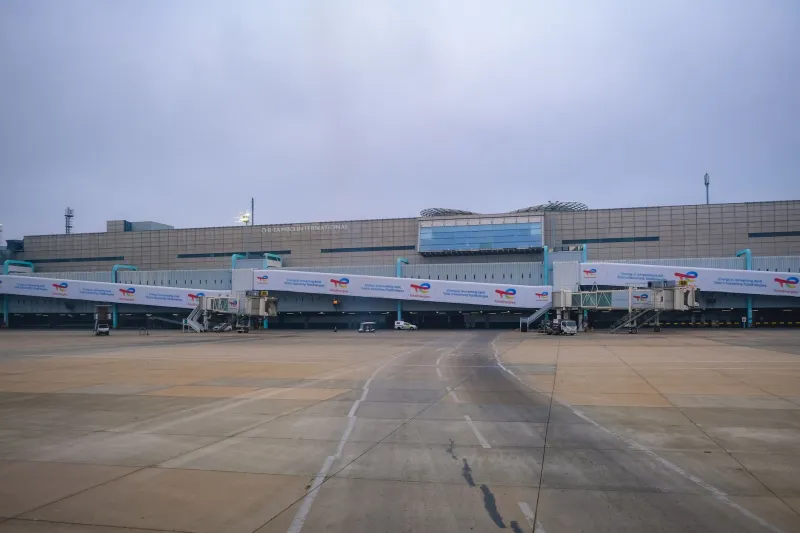
Let's be honest. Most Americans touching down at Incheon International Airport are already mentally somewhere else. They're thinking about Seoul's street food, Busan's beaches, or Jeju's volcanic coastline. Incheon? That's just where the plane lands, right?
Wrong. Completely, deliciously wrong.
The city of Incheon — the actual city, not just the terminal — has been quietly assembling one of the most compelling short-stay experiences in the Asia-Pacific region. And the best part? You don't need a week to feel it. You need maybe 72 hours. Some people are making do with 24 and leaving genuinely impressed.
The Airport That Actually Wants You to Leave (In a Good Way)
Incheon International Airport has consistently ranked among the best airports in the world, and part of that reputation comes from how seriously it takes the idea of transit as experience. Inside the terminal itself, you can catch traditional Korean cultural performances, visit a Korean Cultural Street that showcases regional crafts and architecture, or even take a free cultural class if your layover timing lines up.
But the real magic starts once you step outside.
Unlike airports that feel marooned in the middle of nowhere — we see you, certain American hubs — Incheon Airport sits on Yeongjong Island, which is connected to the mainland and to the broader Incheon metro area by bridges, highways, and a direct rail link. The Airport Railroad Express (AREX) can get you into central Incheon in under 30 minutes. That's faster than a lot of airport-to-downtown commutes in New York or Los Angeles.
The infrastructure here isn't just convenient. It's genuinely designed to pull visitors outward, into the city, rather than keeping them trapped in a duty-free loop.
Songdo: The Neighborhood That Feels Like a Sci-Fi Movie Set
If you've got a full day, point yourself toward Songdo International Business District. It's a planned city that was essentially built from scratch on reclaimed land, and it has this surreal, almost cinematic quality to it — wide boulevards, Central Park (yes, there's a Central Park, and yes, it was literally inspired by the New York one), and a waterfront canal district modeled loosely after Venice.
That sounds like a lot, and it kind of is. But what makes Songdo interesting for American visitors isn't the novelty architecture — it's the livability on display. The parks are full on weekends. The cafes are genuinely great. The Tri-Bowl cultural center, with its three interlocking dome-shaped structures, hosts art exhibitions and performances that you'd pay serious money to see back home.
Songdo is also home to some excellent Korean dining that skews slightly more upscale than the average street food alley — great if you want to ease into Korean cuisine without the sensory overload of a full market experience.
Chinatown and the Open Port District: History You Can Walk Through
For something with more historical texture, the Incheon Chinatown and Open Port area is genuinely one of the most interesting urban heritage zones in Korea. Incheon was one of the first Korean ports opened to foreign trade in the late 19th century, and that history is still visible in the architecture — Japanese colonial-era buildings, Chinese merchant houses, and Korean structures all sitting within a few blocks of each other.
American history buffs might also appreciate that the Incheon Landing during the Korean War — one of the most strategically bold military maneuvers of the 20th century — happened right here. The MacArthur Statue in Freedom Park marks the spot, and the surrounding area has a quiet, reflective weight to it that's worth experiencing.
The Chinatown itself is vibrant and walkable, famous for jajangmyeon (black bean noodles) that supposedly originated right here in Korea as a fusion dish. Getting a bowl feels less like a tourist activity and more like participating in a living culinary tradition.
Muuido Island: The Beach Day You Didn't Budget For
If your layover stretches into two days, take the ferry from Jamjindo Port to Muuido Island. It's a 10-minute ride and the island has beaches, hiking trails, and seafood restaurants where you can eat something that was swimming earlier that morning.
Muuido doesn't have the polish of a resort destination. That's the point. It's the kind of place Koreans go when they want to decompress, and there's something genuinely refreshing about experiencing that side of Korean leisure culture — slower, quieter, built around natural surroundings rather than Instagram moments.
Practical Notes for the Layover Planner
A few things worth knowing before you commit to this plan:
- Luggage storage is available at the airport and at several train stations in the city, so you're not dragging a roller bag through Chinatown.
- T-money cards (Korea's transit card) are available at the airport and make navigating buses and subways almost effortless.
- Visa-free transit allows citizens of many countries, including the US, to enter Korea for short stays without a visa — but double-check current entry requirements before you go, as policies can shift.
- Most major attractions in Incheon are within 30–45 minutes of the airport. You're not committing to a marathon travel day just to see something interesting.
The Bigger Picture
There's a version of Korean travel that a lot of Americans are still defaulting to: land in Incheon, race to Seoul, do the Gyeongbokgung photos, eat at Myeongdong, repeat. That itinerary is fine. It's genuinely good, actually.
But Incheon offers something that Seoul, for all its brilliance, can't quite replicate — a slower, more layered encounter with Korean culture that doesn't require you to fight through crowds or book anything six months in advance. It's accessible in a way that feels almost accidental, like the city is just sitting there, fully formed and ready, waiting for travelers to notice it.
The ones who do tend to come back. Not just through the airport, but to the city itself.
That's the Incheon effect. And it starts the moment you decide not to just keep waiting at the gate.