Not Seoul: How Incheon's DIY Music Scene Is Quietly Building the Next Wave of Korean Sound
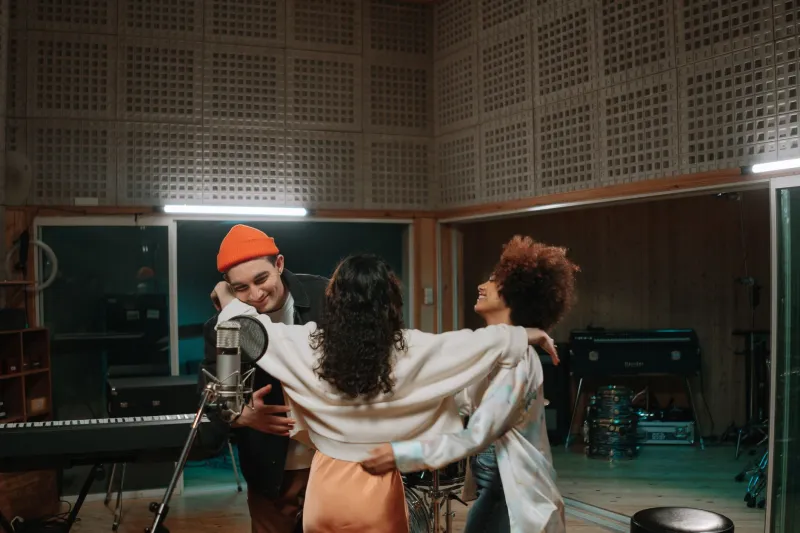
Let's get one thing straight: Incheon is not Seoul's little sibling. That's a narrative the city's musicians are actively tired of, and the more time you spend inside its recording studios, basement venues, and late-night practice spaces, the more you understand why.
Seoul gets the headlines. Seoul gets the billboards. Seoul has the labels, the showcase stages, and the PR machinery that turns Korean artists into global phenomena. But Incheon? Incheon has something that money and infrastructure can't manufacture: a tight creative ecosystem where artists are free to be genuinely weird, genuinely themselves, and genuinely good — without anyone asking them to sand down the edges.
And American listeners, scrolling through Spotify discovery playlists and TikTok rabbit holes at midnight, are starting to notice.
The Geography of Independence
Incheon's music scene has always benefited from a kind of productive neglect. Because the city sits slightly outside Seoul's gravitational pull — close enough to collaborate, far enough to breathe — it never developed the same hyper-competitive, industry-facing culture that defines the capital's music world. There are no major label offices here. There are no idol training academies churning out polished performers on a conveyor belt.
What there is: affordable. Studio time in Incheon runs significantly cheaper than comparable setups in Seoul's Hongdae or Itaewon neighborhoods. Practice spaces in the Bupyeong and Juan areas can be rented for a fraction of what a Seoul musician would pay. That economic reality has made Incheon a natural landing spot for artists who prioritize output over optics — people who'd rather spend their money on equipment than on proximity to industry gatekeepers.
"I moved here from Daejeon three years ago specifically because I could afford to actually make music," says one producer who goes by the name GRAYWAVE online and who has been quietly accumulating a following in the US lo-fi and ambient communities on Spotify. "In Seoul, I was spending half my income on rent near the studios I needed to access. Here, I built my own setup. I make what I want."
His most-streamed track — an eleven-minute ambient piece that samples field recordings from Incheon's Wolmido waterfront — has over 400,000 plays, the majority of them from listeners in the United States.
Hip-Hop with a Port City Perspective
Incheon's relationship with hip-hop runs deep. The city's diverse, working-class neighborhoods — shaped by decades of port trade, industrial labor, and immigrant communities — have produced a strain of Korean rap that sounds nothing like the polished, choreography-ready tracks coming out of Seoul's major studios.
Artists in Incheon's hip-hop underground tend to rap about the city itself: the Chinatown streets near Jayu Park, the industrial waterfront, the strange mix of old-school pojangmacha culture and new Songdo glass towers. It's hyper-local content that, paradoxically, translates powerfully for American listeners who recognize the energy of a city telling its own story on its own terms.
One crew that's been generating buzz in US hip-hop circles is a four-member group out of the Namdong district whose members range in age from 19 to 27. They release music independently through Bandcamp and distribute via DistroKid — the same tools a bedroom rapper in Atlanta or Detroit might use. Their lyrics are almost entirely in Korean, but their production borrows liberally from boom-bap, trap, and Chicago drill. It's a combination that shouldn't work as well as it does.
"We don't make music for Americans," one of the group's MCs told us bluntly, in very good English. "We make music about Incheon. Americans just happen to be listening, which is cool." He paused. "Very cool, actually."
The Experimental Edge
Beyond hip-hop and lo-fi, Incheon has become something of a quiet hub for experimental and electronic music that defies easy categorization. Part of this is geographic — the city's industrial architecture, its port sounds, its in-between status between the ancient and the hypermodern — and part of it is simply the freedom that comes from operating outside the mainstream spotlight.
Several artists working in Incheon's experimental scene have been picked up by small US-based independent labels focused on global electronic music. One producer, who crafts dense, textural soundscapes using a combination of synthesizers and traditional Korean instruments like the haegeum and gayageum, was recently featured on a curated playlist by a well-known US music blog that covers avant-garde and world music crossover content. Her Bandcamp page lists listeners from 34 countries, with the United States consistently ranking first.
"There's an appetite in America for Korean sound that isn't K-pop," she says. "People hear something that feels both foreign and familiar — the textures of traditional instruments mixed with production techniques they recognize — and it opens something up for them."
Building Community Without a Blueprint
What makes Incheon's scene particularly interesting is how consciously its artists have built community infrastructure from scratch. There's no established venue circuit, no legacy festival with decades of goodwill behind it. What exists has been assembled through group chats, shared rehearsal spaces, and a culture of mutual support that veterans of the scene describe as unusually genuine.
Small showcases happen regularly in converted spaces around the Sinpo and Bupyeong neighborhoods — a basement here, a café backroom there. These aren't Instagram events designed for content. They're functional gigs where artists test new material in front of real audiences and connect with other musicians who are solving the same problems they are.
Several Incheon artists have also been intentional about building direct relationships with American audiences through social media, posting process videos, studio session clips, and behind-the-scenes content that gives followers a window into both the music and the city. It's a strategy that sidesteps traditional media gatekeeping entirely — and it's working.
Why This Matters
The story of Korean music breaking into the American mainstream has, until recently, been almost entirely a story about Seoul. BTS, BLACKPINK, aespa, NewJeans — these are Seoul acts, developed by Seoul labels, marketed through Seoul's formidable entertainment infrastructure.
But music culture has never been a single-city story, and the artists building something real in Incheon are a reminder of that. The next Korean act to capture American ears might not come from a glass-tower label headquarters in Gangnam. It might come from a rented studio above a norebang in Bupyeong, made by someone who moved to Incheon because it was the only place they could actually afford to create.
That's not a consolation prize. That's an origin story.
Incheon's musicians know it. And slowly, so does everyone else.